The god of Autonomy in X-Men ‘97
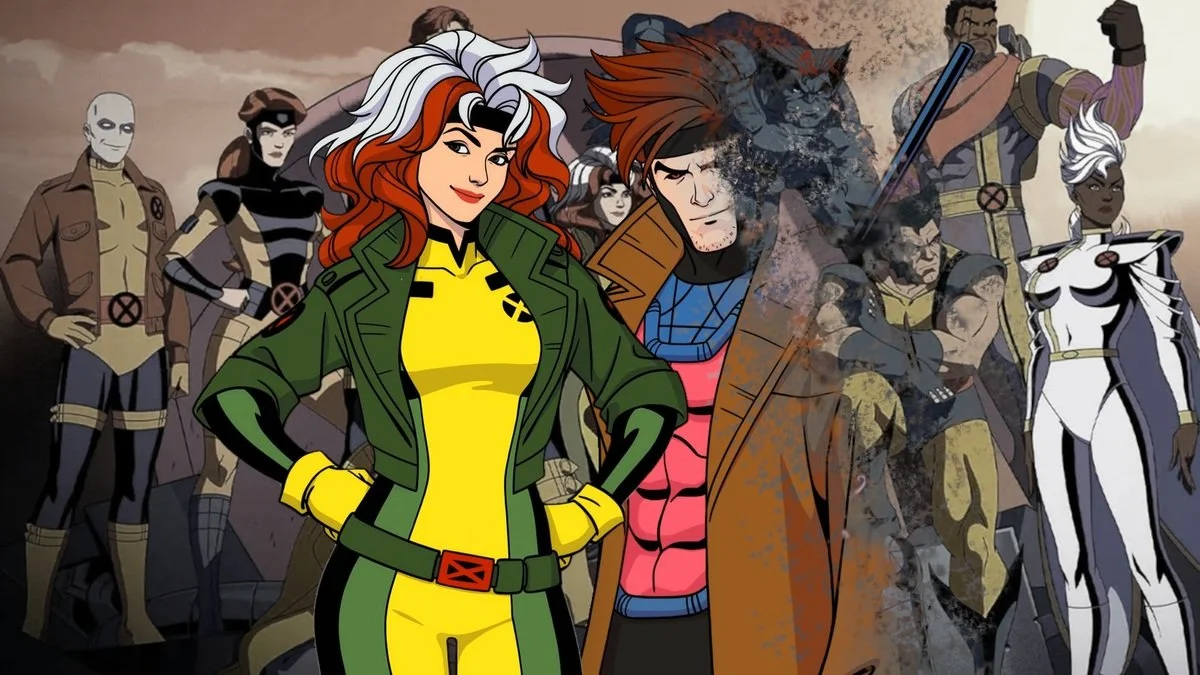
As a kid growing up in the ’90s, X-Men: The Animated Series was my defining Marvel experience. Long before I knew anything about Captain America, Iron Man, Thor, or the Incredible Hulk, I knew Wolverine and his adamantium claws that could cut through anything. I knew Gambit—his cool Cajun accent and explosive playing cards. I knew Professor Xavier and Jean Grey’s telepathy, Storm’s awe-inspiring command of the weather, and Cyclops’ earnest, Boy Scout sense of leadership.
I knew about Rogue’s abilities—and her inabilities. I knew about her strength, her flight, her sugar-sweet drawl, and the fact that she could never touch anyone without consequences.
The X-Men loomed large for me as the Marvel superhero team.
Fast forward to 2024 and the arrival of X-Men ’97. Rarely does a revival so thoroughly eclipse its predecessor in quality. From pacing to characterization to action, it felt as though I were transported back, reliving the joy of watching a Saturday morning cartoon all over again.
That’s not to say there weren’t things to nitpick. Morph’s amorphous form, for one. Retconning Jean and Scott’s relationship into the Goblin Queen storyline is another—and a risky move at that.
But one of the most praised elements of X-Men ’97, and the one I found most problematic, was how it framed Rogue’s decision to explore a relationship with Magneto.
In fairness, Rogue does not ultimately choose Magneto. After a very public, rather sensual dance and kiss, she turns him down, telling him, “Thanks for that, love. But Remy was right. Some things are deeper than touch.” She acknowledges that her love for Remy runs deeper than what Magneto’s touch could allow.
And yet, what is amiss is the moral framing.
Yes, Rogue recognizes that her love for Remy is deeper. But read through critical and fan responses, and you will often find the moment celebrated as “complex,” “rooted in autonomy,” and “adult.” And while none of that is false, what is troubling is the way both the series and its audience frame the entire process. The show invites us to see Rogue’s actions primarily as self-actualization: a woman exploring what it could mean to choose a full life, including physical intimacy, after years of deprivation.
And that’s a beautiful storyline for Rogue.
Having followed her from the original animated series through the abysmal 20th Century Fox films and into other incarnations across comics and animation, I have deep compassion for Anna-Marie’s story. For a character who can carry a tank over her head while flying through the air, there is something profoundly humanizing about her longing for touch and physical intimacy.
My problem is not that she chose to explore the idea of a fully realized life. My problem is that the series frames the entire process without proper proportion given to moral obligation Anna-Marie should have felt while doing so.
Indeed, what we are given is an emphasis on Rogue’s “empowerment” in exploring an alternative possibility, rather than a serious reckoning with the relational harm incurred in that exploration. The moment is presented as beautiful—perhaps rightly so—but filtered through a liberal ideology of autonomy that treats self-discovery itself as morally ennobling.
To see what this framing obscures, we have to take our eyes off the yellow-and-green suit of our roguish heroine and shift our gaze to the Cajun.
For years, Gambit willingly denied himself physical intimacy out of love for Rogue. This was not accidental suffering or naïve hope. It was a repeated, conscious sacrifice. He structured his life around her limitations, accepting permanent restraint as the cost of being with her.
That is not symbolic devotion; it is lived, embodied commitment to a beloved.
Crucially, Rogue accepted that sacrifice. She did not reject his heart or turn him away. She allowed the relationship to exist and blossom on those terms, benefiting from his restraint while sharing in the emotional intimacy that that very restraint made possible. And over time, that acceptance created moral weight.
When speaking about Rogue’s responsibility to Remy, I can already hear the alarm bells: She owed him nothing.
But is that really how relationships work?
I am not speaking of ownership or entitlement. I am speaking of obligation—the kind that inevitably arises when two people enter into a relationship, and the kind that arises when one person repeatedly bears a cost for another.
Yes, Gambit’s sacrifice was freely given. Rogue did not coerce it, demand it, or bargain for it. But freedom does not nullify moral weight. A gift, once received and relied upon, alters the moral landscape of a relationship even if it was never requested.
This was no unrequited love. It was a mutual understanding.
To say that Rogue incurred an obligation is not to claim she was indebted in a transactional sense, or that Gambit was entitled to her future deprivation. Love is not a ledger. But neither does it exist in a vacuum. When one person repeatedly bears a cost that makes a shared life possible, and the other knowingly accepts that cost, a form of moral asymmetry emerges that cannot be wished away by appeals to voluntariness alone.
Anna-Marie could not have physical intimacy and therefore accepted Remy’s self-denial so that they both could sustain a relationship otherwise impossible.
And when Magneto arrives and offers her something Remy could not—physical intimacy—this must be recognized as a moment of narrative symmetry.
Until now, Rogue had no choice. Now, the moral question is whether she will choose the same sacrifice Remy already made for her.
Because the series wanted to highlight autonomy and self-discovery, it placed the narrative emphasis on her realization itself—on the act of choosing—rather than on the weight the obligations that choice did not erase.
Her decision to explore the possibility of physical intimacy is not morally wrong. In fact, it is completely understandable. Many people would choose the same.
Indeed, good storytelling often requires that characters we love make choices we don’t fully agree with yet find entirely reasonable.
It is not wrong for Anna-Marie to desire and explore the potential of a full life, one that includes sexual fulfillment, even in tension with her love for Remy.
The problem is that such a choice is no, and should not be, morally elevated.
Modern storytelling often treats autonomy as a moral trump card: if a choice is freely made and emotionally sincere, it is framed as good and placed beyond critique. Often, the importance lies in the choosing, not in what is chosen.
But agency does not sanctify decisions; it assigns responsibility. Rogue’s autonomy does not erase the harm generated by her actions. It clarifies it.
The moral issue is not that Rogue wanted to be touched. Nor would it be a moral issue if she desired that more than her relationship with Remy. The moral issue is that she engaged in a very public act with Magneto without fully reckoning with what she had already accepted from Gambit.
She allowed Gambit to sacrifice physical intimacy for her. That sacrifice was foundational to their relationship. And when faced with the opportunity to make the same sacrifice herself, she prioritized embodied intimacy—if only momentarily—over fidelity to that bond.
If autonomy and “choosing yourself” are what our society values because they are deemed honest, then honesty requires acknowledging that harm she caused here. Rogue prioritized self-discovery over immediate fidelity to an existing obligation.
This is not about whether she ultimately chose Remy. Again, it is about framing. And the framing elevates her process of self-exploration while declining to treat its moral cost with comparable seriousness.
What deserves critique is not Rogue’s humanity, but the narrative’s insistence on romanticizing autonomy and self-discovery.
We must de-romanticize autonomy if we are to preserve its meaning. There is no inherent nobility in “choosing for yourself” when someone else has already paid a profound price for a shared life.
Autonomy is not a virtue; it is a condition. Moral elevation comes not from the mere fact that we choose, but from what we choose. The moral question is never whether a choice is free, but whether it honors the obligations freedom does not erase.
What honesty would have required was Rogue reckoning openly with the fact that, despite loving Gambit, she craved something else more—even in light of his sacrifices. She weighed those sacrifices and chose something else at his expense.
That is allowed. It is human. But it does not deserve undue elevation.
When we strip away our cultural fixation on autonomy-as-good, what remains is not an inspiring tale of self-actualization, but an honest, painful revelation about the limits of human love.